Click this for a quick easy guide to all the Memory Work resources and information available on this website.


Memory Book Training
Memory Books.Org.UK is not in competition with the large NGO's with their big budgets, training departments and indepth expertise. We are here to provide a first aid service to the millions of families who will never have the chance to experience the benefits of Memory Book work and NGO projects. To deal with such large numbers of families affected by the early approach of death and bereavement a more radical approach is required. Therefore, we are using this website to make Memory Book materials directly available to all those families that can gain access to the web.
Background to the training programme.
In 1996 the first young mothers in Uganda started making Memory Books for their children. It was easy for them to understand why their children needed all this family information. But they also began to realise that telling the truth about HIV/AIDS and other sensitive problems in the family would force them to talk about family relationships, sex, sexuality, illness, death, money, property. Many of these issues were culturally taboo and most of the parents had never before discussed them with their children: They were frightened at the prospect of explaining all this personal information. Their anxieties began to bubble up. These are the sort of questions that the parents feared:
- "How can I explain how I got HIV/AIDS when I never talk to my children about sex?”
- "My daughter is only 10 – how can I possibly tell her I am going to die."
- "If I tell my children about all these problems they are going to ask what will happen to them in the future – what can I say to them?"
- "We've never talked about family business in front of the children – so how will we know they are old enough to understand about money and property?"
- "I am frightened my children will ask how their father died – what shall I say?"
- "I'm afraid my children will spread our family secrets around the village."
- "I don't have any sisters and my parents are old – so WHO will look after my children when I die – I don't want to think about it.”
Fear about how to explain these sensitive topics and how to answer awkward questions from their children was getting in the way of the parents’ getting on with their Memory Books and making future plans. So Beatrice Were* and other leaders of the group realised they must expand the scope of the project. In future, as well as supporting parents to write their Memory Books, they would also be offered basic training to help them become more confident about communicating with their children and planning for their future.
(*Beatrice Were was at that time co-ordinator of the first group of women in Uganda who spoke openly about their HIV status. She has subsequently become known across the world as a leading spokesperson on Human Rights and particularly the impact of HIV/AIDS on women and children.)Aims of the Memory Project Training Programme.
With help from colleagues in Uganda* and England**, the training programme took shape. It deals with all the problem areas that the parents identified. In summary the training programme covers:
- Basics of child development including what children understand and need to know at different ages and what parents need to be aware of at different stages of child development
- Different styles of parenting and building up family strengths.
- Communication skills – learning different ways of approaching children, listening and responding to their questions and taking their issues and needs into account.
- Involving children in the whole process of learning about the family - past, present and future; passing on knowledge, skills, and values and helping children to build a strong sense of identity.
- Planning for the future care of children - and placing children at the centre of these plans.
- Coping with loss and separation – helping children face the changes ahead.
- Legal rights and duties, including will making, naming standby guardians, making schooling arrangements and registration of property,
- In view of changes in medical care, and the fact that many people with HIV/AIDS are now living relatively long and normal lives, a new topic has been added: Living responsibly with HIV/AIDS. This topic also provides information on the rights and needs of children which all parents need to be aware of when making decisions about themselves and their children.
Using the training programme.
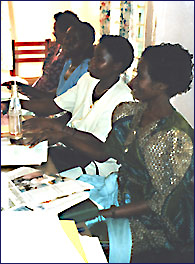 The original one-week training programme developed by the women became known as The Memory Project. The original ideas have now been re-organised into separate TOPICS. Each main topic has an outline programme, background information, ideas for group exercises and individual activities to give parents a chance to understand and try out the new ideas. There is also a variety of back-up information and hand-outs in a separate section at the end of the Training Programme. Each topic can be studied on its own or as part of the whole programme. This gives parents and members of the wider community the chance to choose the subjects which are most important in their situation.
Working without professional trainers. The aim of this website is to bring the Memory Project ideas to people who have no other way of getting them, because the professional training programmes are out of reach. Rather than go without the Memory Book and the training programme, individuals or groups of parents may decide to have a go at running their own workshop. Another idea is to look for someone in the community who is prepared to take the lead. To make this easier to manage without a professional trainer, this website also includes a guide booklet on Ideas for new trainers and workshop leaders. This gives very simple and practical information for people who have little or no previous experience of leading groups. It includes advice on preparing for, setting up and managing the workshops as well as ideas about how to use the strengths of participants and encourage them to help each other cope with such emotional and life changing subjects.
This is NOT a substitute for having a well run professional training course. But with good will and understanding by everyone who takes part, it should be possible for many more parents and children to benefit from the Memory Project ideas.
Working on your own. If there is no-one around to share the work, individual parents or other people looking after children can learn a lot by working through the topics on their own. But it really is important for anyone working alone, to try to find a reliable supporter to talk to, particularly when they get to the very sensitive or emotional topics.
Acknowledgements: As well as Beatrice Were and her colleagues, there were many others in Uganda who contributed to building up the Memory Project. Special thanks are due to Lucy Shillingi and colleagues from SCF , fellows from School of Psychology at Makerere University and Job Wanakwakwa from AWOFS. In the UK training materials and background information were provided by Maggie Kelly and Carol Lindsay Smith and put together as a manual by Rory O’Brine. 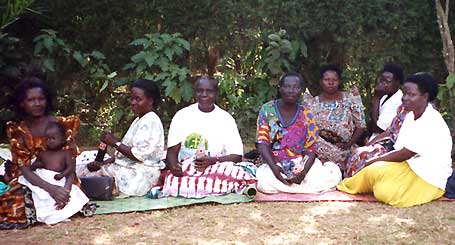
Subjects covered in the Memory Project Training Manual.
The training programme is divided into eleven separate Topics. Each one covers a chunk of the information which will help parents and children to cope better with living with HIV/AIDS in their family. Each topic comes complete with background information and suggestions for group activities and exercises which will make the ideas come alive. Even where there is no trainer or workshop leader, a lot of the material will be useful for people working on their own. It’s best to complete all the sections in the manual. But if time and resources are limited, then the group leaders and participants can work out which topics are most important for them. Here is a summary of the information contained in each topic:
1. What is the Memory Project. The Memory Book is the idea which gets people thinking and talking. The Memory Project is the training programme which helps parents to do their best for children growing up in a family with HIV/AIDS. This topic introduces the main themes including: Understanding different stages of child development; Talking openly to children about HIV/AIDS in the family; Making Memory Books; Putting children at the centre of future PLANS and involving them when they are old enough to understand; Taking legal steps to protect plans and property.
2. Understanding our children. This topic looks at the different stages of child development; what do children understand at different ages? What does it mean to be a parent? how can we improve the way we talk and LISTEN to our children? Exercises in this topic give parents a chance to remember their own childhood experiences so they can “tune in” to how their children may be feeling.
3. Facing up to Family Secrets. This topic is currently being revised. It will cover learning to talk to children about illness in the family, including HIV/AIDS, death of people who are close and other sensitive family matters. Why should we disclose these and other family secrets? Who needs to know? What are the benefits of being open? Will children be more aware of the risks of HIV if they hear about it from their parents? How do we get started on subjects which most families can’t face talking about – sex, death, AIDS… This topic gives parents a chance to think about the difficult questions their children will ask – and try out ways of dealing with them.
4. Writing Memory Books. In this topic parents will learn what’s involved in writing a Memory Book and start the process of collecting information and finding ways to write about their hopes and fears. This will generally make parents ask themselves “If I am writing all this stuff down for the children, why not TALK to them right now?” There is also discussion of why and how to involve fathers and extended family in this work. Parents also have time to decide IF and WHEN to invite children to take part.
5. Building on the Memory Book process. This topic is being rewritten.It will start from the observation that once children realise what their parents are doing, the questions and the understanding will begin to “flow.” This topic will help parents to grab this opportunity to talk more openly with children and family members and to pass on important family values, skills and knowledge. They will soon find they have completely changed their relationship with their children. The wall of silence will be broken down!
6. Confronting the hard times ahead. Under revison. This topic will help parents to face up to the emotional impact of separation and loss. (Topic 7 below deals with the more practical side of preparing for changes in the family.) Most parents find that when they work on their Memory Books with their children, opportunities will come up to talk about “what happens next.” If children have been allowed to talk about their fears, and how they could cope if the worst happens, they will be able to face future losses, separation and death with less damage. This topic will help parents to cope with their own very sad and stressful feelings and suggest ways to share the information with their children. It will help both parents and children face reality rather than ran away from it!
7. Making contingency plans for the future care of children. This topic covers some of the ways that parents can plan ahead for their children. However bleak the future looks, it will be easier to manage if children have had a chance to discuss the options with their parents. This will help them to know who to trust and rely on in the years ahead. However some parents cant move ahead with choosing a guardian because there is no-one in the close family who could take responsibility for their children. To help parents think of other solutions, this topic also explains a system which existed in most rural communities before so many families became separated by illness, war or migration to the cities. This system, often called The Family Group Conference*, provides a way to bring extended family and the wider community together, to work out the best back-up plan for each child. Through role play participants will have the chance to find out if this system could help them sort out some of their problems.
8. Adjusting to new relationships. Topic under revision. As a result of HIV/AIDS in the family many children have to adjust to being moved to live in a different household with “new parents.” Or they may have to accept a step-parent joining their family at a time when they feel distressed or angry. This topic looks at how to make it easier for all concerned to cope with the changes.
9. Making sure that PLANS are carried out. This topic helps parents to understand how the law can be used to give official back up to plans for their children. Parents will be able to think about how to choose the most suitable guardian and how to make the arrangement legally binding. There is guidance on how to register ownership of property and write wills.
10. Living responsibly with HIV/AIDS. Topic being revised. Thanks to improvements in health care many people with HIV/AIDS are now living long and relatively normal lives. This raises both opportunities and dilemmas. This topic will give parents and carers a chance to be clear about the rights of children and parental responsibility towards them. There will also be a chance to think about some of the really difficult questions: what to explain to children? how will children react if you get into a new relationship? is it right to have more children?
Please note at the current time not all the modules are ready for download. See right column on this page for which modules are available. If you would like to be alerted by email when the outstanding modules can be downloaded use the Contact Form.

