Click this for a quick easy guide to all the Memory Work resources and information available on this website.


Making a Memory Book
This section explains the purpose of the Memory Book and gives practical advice about how to start on the work. Most of the following information is also covered in Sections 1,2 and 3 of the booklet Memory Book for Africa. The full text can be downloaded from this website on the Memory Book Guide/languages page. Or it can be bought as a printed booklet from Teaching aids at Low Cost: talc [at] talcuk [dot] org or by post from POBox 49, St. Albans, Herts AL1 5TX.
What is the Memory Book for?
In The Memory Book Story we explained how the idea grew out of the needs of African parents who were living in London, who were afraid they would die before their children were fully independent. These parents were out of reach of family support and their children were growing up without understanding their true identity. The parents realised that, before illness overtook them, they must write down all the information their children would need so that, in the future, they could answer the question “WHO AM I ?” As these African parents talked to each other about the sort of information they should provide for their children, The Memory Book began to take shape. Their ideas formed the “backbone” and over the next few years new ideas were added. Then with help of a group of young mothers in Uganda the original version was transformed into The Memory Book for Africa.
WHO is the Memory Book for?
Although the original Memory Books were made by parents who were already very ill with HIV/Aids, the same ideas have been used by parents and children who are facing family breakdown for many other reasons. We also know that people from different cultures and different levels of education find the ideas are easy to understand. In fact almost everyone who hears about the Memory Book says “It’s something I really want to do for my family.”
Why do it?
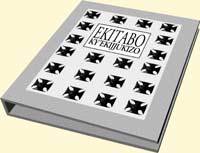 When there is a crisis in the family (illness, death, marriage breakdown, parents moving away because of war or to find work……) children often get moved around. They may be sent to distant relatives or to “safety” in a remote town; sometimes brothers and sisters are split up and if the adults don’t explain the situation clearly its all too easy for them to lose contact with each other and the home area. Once the thread of family life has been broken, young children can easily forget about their family origins and be totally confused about who they really ARE. The main reason for making a Memory Book is to be sure that, whatever problems come up in their lives, children will have the true facts about their birth family and know how to keep in touch with relatives and important people from the past. Over the past 15 years many thousands of families have made Memory Books. We know that the background information and parental advice that they wrote down has helped their children to know the true facts and to grow up with a strong sense of who they are despite very sad and difficult circumstances. We also know from the experience of so many parents that there are many other benefits from making a Memory Book. These include:
- helping parents to stop running away from difficult and distressing problems in their lives.
- giving parents a way to be more open with their children about family problems – making a hole in “the wall of silence.”
- working out how to answer awkward questions – about sex, illness, relationships, paternity, finances – all the topics which were never talked about in the past.
- giving children a chance to ask the questions they never dared to raise before
- bringing families together, because children soon get interested in the Memory Book work and want to get involved.
- providing a comfortable way for parents and children to talk to each other about their emotions, hopes and fears as they work through the different topics.
- helping children to understand where they fit in the family and beginning the process of planning what will happen to them if and when the parent(s) die.
- proving to children that their parents didn’t abandon them but made a big effort to provide important information and give guidance for the future.
- giving young children the gift of words their parents would have spoken to them if they had lived long enough.
- giving parents the solace of writing about their love for their children and hopes for their future.
What goes into the Memory Book?
Writing down the family history means remembering back to good times and bad. It means being truthful about sad or difficult information. It can’t be done in a day, but it can be done in sections and it often helps to get started on an “easy” topic, for instance, describing “my school days.” Once you get going it will be easier to move on to the more emotional or difficult topics. Here is a summary of the sort of information to put into a full Memory Book:
- information about the mother AND the father, including family background, growing up experiences, school days, work, skills and interests.
- detailed information about the child for whom the Memory Book is being written, including facts about time and place of birth, early childhood and history up to date.
- information about brothers and sisters and other close family members including their age, relationship to the child and where they are now.
- information about the extended family, other important people in the community and/or clan – with contact details.
- important traditions and beliefs that the child needs to understand.
- a family tree showing how all these people are connected to each other.
- There is also space in the Memory Book to write about beliefs, hopes for the child’s future and advice on how to cope with life’s challenges.
Getting help to make your Memory Book.
Because of the powerful emotional impact of making a Memory Book, it’s better if parents or carers can join a training programme or self-help group.
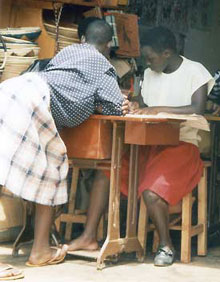
Formal training.
Many of the big NGO’s have borrowed the Memory Book ideas and it’s worth contacting any of these organisations which work in your country or region, to ask if they run courses. Also check the Training Section of this website where we will include information on any courses that we hear about.Self-help groups.
In some areas where there are no formal training programmes within reach, parents have got together and helped each other to work through the Memory Book guidelines. If you decide to do this you need to make some ground rules with the other members of the group about confidentiality, timescale for getting the work done and how you will support each other.Working alone.
If it's not possible to find a training course or join a self-help group, you will find there is enough information in this section and in the Memory Book text to help you get on with the work on your own.
BUT before you start please try to find a trustworthy relative, friend or member of your community to help you talk things through. Writing down your memories, explaining sad or difficult circumstances, planning how you will answer your children’s questions– its all bound to stir up your emotions. You can also ask your supporter to encourage you not to give up when you hit a difficult patch – but to push on until you finish the book!
Involving children.
In many families parents and children find it really difficult to talk about the most important problems which are hanging over their lives - illness, separation, money, future plans. Avoiding these topics leaves both sides angry and frightened – and while there is no communication, time is running out……. For many families the Memory Book has come to the rescue because the process of working out what to write down seems to make the dangerous topics more manageable. Parents also begin to ask themselves “Why don’t I just talk to my children about this?” At the same time, children see their parents very involved in writing a book. “What’s this all about?” they ask. Gradually parents and children begin to talk about the plan to make a Memory Book and in many cases children get pulled in to help with the writing or searching for missing information, photos, certificates. As they do the practical work together parents and children just naturally start to talk about their hopes and fears, ask questions and discuss options for the future. This may not be possible in every family, but where it happens, then Secrets melt away and children have the huge benefit of hearing the truth direct from their parents. In other cases, where children are not directly involved, because they are too young or are living far away, the parents still have the chance to write down their side of the story, the truth as they know it, and this will provide a wonderful legacy of wise words, precious memories and standards to live by.How to get started.
As explained above, you don’t have to write the whole Memory Book at one go. Here are 10 easy steps - a summary of advice from the Memory Book text and from the notes above:
- Read through the whole of the Memory Book so you are clear what is involved.
- Try to get started in good time, before you are overwhelmed by illness or other problems.
- IF possible find a training workshop or self-help group to work with.
- IF that’s not possible, find a reliable “supporter” and just get on with it on your own. If you go step by step you WILL get there.
- Decide whether to write in a note book or on loose pages. Its often better to use loose paper and put the pages into a ring folder. This way you can add more information or make changes as you go along.
- Decide if you will write ONE book for the whole family, or make individual books for EACH CHILD. If you are going to make individual books, you will be able to copy a lot of the information which applies to all the children, so it doesn’t mean starting from scratch each time.
- Choose an EASY TOPIC to start with – something which is not too emotional or sad. Best of all is something which you will enjoy writing about such as your own early childhood memories or school days, or the birth of the child you are writing about.
- Once you have got going, it wont be difficult to move on to more difficult topics.
- Keep looking for photos, pictures from newspapers, old letters, words of poems or hymns, anything that will help to bring your words alive.
- Try hard to involve your children or other close family members. Talking to each other, answering questions, will help you remember many more facts. Children can also be a great help if you are tired, or if writing is a slow process. Above all it gives children the chance to ask about the things they really want to know.
Making a Memory Basket or Memory Box as well as a Book?
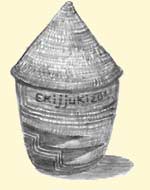 Many families have found that once they start writing down the words, they also find things around the home that really help to “stir the memories.” These are not big or valuable items but, for instance, a child’s favourite book, the baby’s mug or spoon, a piece of cloth from mother’s clothing – all sorts of things which children will remember from their growing up years. These can be put together in a traditional basket, a tin trunk or a plastic box. (Remember that important documents such as birth certificates, property titles etc should NOT be put in the Memory Basket or Box, but stored in a safe place. Ideas on where to put documents are given in Section 5.6 of the Memory Book Guide.)
The Cost of doing this work.
Most of what you need is in YOUR head. The only things to buy for each Memory Book you plan to write are:
- a note book with a strong cover (which you can decorate yourself) OR
- sheets of paper and a ring binder to put them in
- a good quality pen or biro so that your writing doesn’t fade
- if you want to use the page headings supplied with the Memory Book text, these need to be photocopied (3 pages.)
- you may also want copies of the maps and the family trees which are part of the Memory Book Guide package.
- photos or copies of photos. If no family photos are available you can take suitable pictures from magazines or newspapers to illustrate your words.

